The USDC rent settlement landscape
Paying rent with USDC has evolved from a niche experiment into a practical infrastructure choice for tenants and landlords who want to bypass the friction of traditional banking rails. The core appeal isn't speculation; it's the mechanics of settlement. Unlike credit cards that charge merchants 2–3% in interchange fees, or wire transfers that can take days and incur flat fees, USDC allows for near-instant, low-cost transfers that settle on-chain.
Currently, two main paths exist for settling rent in USDC. The first is direct on-chain transfers, where the tenant sends USDC from their wallet directly to the landlord’s wallet address. This is the most direct method, bypassing intermediaries entirely. The second path involves card-based settlement, where tenants use crypto-backed debit cards to pay landlords who accept standard card payments. While this route is more convenient for landlords who don’t hold crypto, it often reintroduces fees similar to traditional card transactions, though some providers offer zero-fee options for USDC conversions.
The cost advantage of direct USDC transfers is significant. Traditional rent payments often involve ACH fees, wire transfer costs, or processing fees from property management platforms. USDC transfers typically cost a fraction of a cent in network fees, regardless of the amount. For a $2,000 monthly rent payment, this translates to substantial savings over time, especially when compared to the 2–3% fees associated with credit card payments.
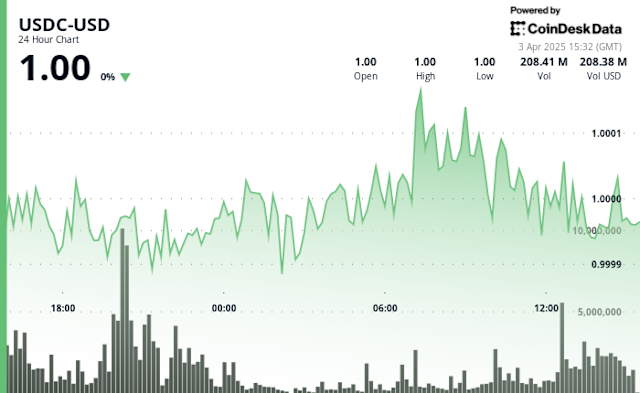
To understand the stability of the asset being used for such a large transaction, it helps to look at its price action relative to the dollar.
This stability is not accidental. USDC is a fiat-backed stablecoin, meaning every unit is backed 1:1 by cash and short-dated U.S. Treasuries held in regulated U.S. financial institutions. This transparency, verified through monthly attestations, provides a level of safety that distinguishes it from algorithmic stablecoins or unbacked tokens. For rent payments, where value preservation is critical, this backing is the foundation of trust.
While the technology is mature, adoption remains fragmented. Most landlords still rely on traditional banking systems, meaning tenants often need to negotiate payment methods or use third-party platforms that convert crypto to fiat for the landlord. However, as more property management software integrates crypto payments, the friction is slowly decreasing. The trend is moving toward direct settlement, where the landlord receives USDC directly, reducing reliance on intermediaries and keeping costs low for both parties.
How the money actually moves
Paying rent with USDC isn't a single button press; it's a choice of rails. You can send tokens directly to a landlord's wallet, use a crypto debit card to swipe like cash, or route the payment through a specialized property management processor. The infrastructure you choose determines the speed, the cost, and who actually receives the funds.
Direct transfers: Peer-to-peer settlement
The most direct method is sending USDC from your wallet to the landlord’s wallet address. This happens on-chain, meaning the transaction settles in seconds to minutes depending on the network (like Solana, Stellar, or Ethereum Layer 2s). There are no middlemen taking a cut, but you are responsible for ensuring the landlord is comfortable receiving raw crypto.
This method is often the cheapest. One user noted on Reddit that paying with USDC incurred zero fees compared to the ~2.5% fees associated with other crypto options when using certain card networks. However, it requires the landlord to have a digital wallet and the technical know-how to verify the incoming transaction. It is not an "official" feature of most leasing platforms but rather a private arrangement enabled by stablecoin infrastructure.
Crypto debit cards: The credit card experience
If your landlord accepts a standard credit card, a crypto debit card is the bridge. You load USDC onto a card (like Coinbase Card or similar providers), and when you pay rent, the transaction is processed as a standard Visa or Mastercard swipe. The provider converts your USDC to fiat at the point of sale or just before.
This offers the convenience of a traditional rental payment but introduces conversion fees. These fees typically range from 1% to 3%, depending on the provider and your card tier. The upside is that the landlord sees a normal credit card charge, avoiding the friction of explaining blockchain transactions to property managers who just want their rent on time.
Property management processors
Some platforms integrate USDC payments directly into their rent collection systems. These tools act as a merchant of record, accepting stablecoins and settling in fiat to the landlord’s bank account. This removes the volatility risk for the landlord but usually comes with a processing fee passed on to the tenant or owner.
| Feature | Direct Transfer | Crypto Debit Card | Property Processor |
|---|---|---|---|
| Speed | Seconds to Minutes | Instant (at terminal) | 1-3 Business Days |
| Fees | Network Gas Fees (often low) | 1-3% Conversion Fee | 1-2% Processing Fee |
| Landlord Experience | Needs Wallet Knowledge | Standard Credit Card | Standard Bank Deposit |
| Privacy | High (On-chain public) | Low (Card network data) | Medium (Platform data) |
Safety and settlement reliability
When moving significant sums like rent, settlement finality matters. USDC is designed as a fiat-backed stablecoin, meaning every token is backed by cash and short-dated U.S. Treasuries held in regulated U.S. financial institutions. This transparency, verified through monthly attestations, provides a layer of stability that speculative crypto assets lack.
For landlords, the primary concern is usually volatility. Direct transfers and processor-based payments mitigate this by settling quickly or converting to fiat immediately. Card payments carry the slight risk of chargebacks, which is less common in direct crypto transfers but still a factor to consider when choosing your payment rail.
Strategic Implications for Renting With USDC
Adopting USDC for rent shifts the conversation from speculative crypto gains to practical financial infrastructure. For tenants, the primary advantage is cost efficiency. Unlike credit cards that often charge 2.5% processing fees for large transactions, USDC transfers typically incur minimal network fees. This makes it a competitive alternative for paying monthly rent, especially when landlords accept direct wallet-to-wallet transfers.
However, this convenience comes with significant tax reporting complexities. In many jurisdictions, including the United States, cryptocurrency is treated as property rather than currency. This means every transaction where you convert fiat to USDC, or potentially even the transfer itself depending on local interpretation, can be a taxable event. Landlords receiving USDC must also track the fair market value at the time of receipt to report income correctly. The volatility risk is largely mitigated by USDC’s stablecoin nature, but the administrative burden of tracking basis and gains remains a critical consideration for both parties.
Market acceptance is growing but remains uneven. Commercial real estate sectors are more likely to adopt digital asset payments due to higher transaction volumes and sophisticated accounting teams. Residential markets are slower to adapt, often relying on informal arrangements where landlords personally hold the asset. While platforms like Coinbase facilitate these payments, they are not always an "official" integrated feature of leasing software but rather a workaround enabled by the landlord’s willingness to accept direct transfers. Tenants should verify their lease agreement explicitly allows digital asset payments to avoid contractual disputes.
For those monitoring market sentiment, the broader crypto landscape influences stability. While USDC is designed to maintain a 1:1 peg with the US dollar, external market shocks can impact user confidence. The chart below illustrates recent market trends, providing context for the stability of the asset class you are integrating into your housing costs.
Essential tools for stablecoin rent
Paying rent with USDC removes the friction of traditional crypto volatility, but it still requires the right infrastructure to handle the transaction and the conversion. You need a wallet that supports USDC natively, a payment method that accepts it, and a tracking tool to manage the cash flow. The goal is to keep the process as invisible as possible.
Hardware wallets and secure storage
Security is the baseline. You should never hold your rent money in an exchange wallet if you can avoid it. A hardware wallet keeps your private keys offline, protecting your funds from online hacks. For USDC specifically, ensure the device supports the ERC-20 standard (Ethereum) or Solana, depending on which network your landlord prefers.


As an Amazon Associate, we may earn from qualifying purchases.
Crypto debit cards for direct payment
Most landlords do not accept crypto directly. They need US dollars. A crypto debit card acts as the bridge, converting your USDC to fiat at the point of sale. This avoids the need to manually send money to a landlord’s wallet for every rent cycle. Look for cards that offer zero fees on USDC conversions, as standard cards often charge 2-3% for crypto spending.
Portfolio and transaction tracking
Stablecoin rent is still a taxable event in many jurisdictions, or at least requires clear paper trails for your own records. Use a portfolio tracker that integrates with your wallet address to monitor your USDC balance and transaction history. This ensures you always have enough funds to cover the rent and provides an audit trail if your landlord questions the payment.
Is USDC Safe for Rent Payments?
When you’re paying rent, stability isn’t just a preference—it’s a necessity. Unlike volatile cryptocurrencies, USDC (USD Coin) is a fiat-backed stablecoin designed to maintain a 1:1 peg with the US dollar. This means one USDC is always intended to equal one US dollar, providing a predictable value for both you and your landlord.
The safety of USDC rests on its reserve structure. Every unit of USDC in circulation is backed 100% by cash and short-dated US Treasuries held in regulated US financial institutions. This isn’t a theoretical promise; it’s verified through monthly attestation reports published by independent accounting firms. You can check the latest reserve details directly on the official Circle website.
This transparency matters because it eliminates the guesswork. Your rent payment isn’t tied to a speculative asset that could swing wildly in value overnight. Instead, it relies on a regulated financial infrastructure that prioritizes liquidity and reserve backing. For landlords, this means receiving payment in a digital dollar that holds its value, reducing the risk of depreciation between the time you send the rent and the time it’s processed.
Common questions about USDC rent
Paying rent with crypto introduces specific logistical and security questions that go beyond standard investment concerns. Understanding the mechanics of stablecoins and the infrastructure required to process them is essential for a smooth transaction.
No comments yet. Be the first to share your thoughts!