How USDC rent settlement works
When you pay rent with USDC, the transaction rarely lands directly in your landlord’s blockchain wallet. Instead, the process relies on a third-party payment processor acting as a bridge between the crypto and traditional banking systems. This infrastructure ensures that the landlord receives stable, spendable currency without needing to manage digital asset volatility or compliance.
The flow typically begins when you initiate a payment through a platform like TrustLinq. You transfer USDC from your wallet to the processor’s designated address. Once the blockchain confirms the transaction, the processor converts the stablecoin into fiat currency, such as USD. This conversion happens almost instantly, allowing the funds to be deposited directly into the landlord’s bank account via standard ACH or wire transfer.
This model protects landlords from the risks associated with holding crypto. They receive the exact dollar amount owed, minus any processing fees, without ever touching a private key or navigating a decentralized exchange. For tenants, it offers a way to leverage digital assets for essential expenses while maintaining the simplicity of a traditional bank deposit for the property owner.
The choice of processor matters. Reputable providers handle the regulatory compliance, including Know Your Customer (KYC) and Anti-Money Laundering (AML) checks, so you don’t have to worry about the legal intricacies of cross-border or crypto-to-fiat transactions. This separation of concerns allows you to pay with USDC while the processor manages the heavy lifting of settlement.
The rails behind stablecoin rent
Paying rent with USDC works because of two distinct layers: the blockchain network that moves the token and the off-ramp infrastructure that converts it into fiat currency for the landlord. You are not sending "crypto" to a bank account directly. You are sending a digital token that is instantly converted into dollars via a regulated financial bridge.
The settlement layer: Ethereum and Solana
Most USDC rent payments settle on Ethereum or Solana. These blockchains act as the ledger where the transaction is recorded. Ethereum offers deep liquidity and established smart contract infrastructure, while Solana provides high throughput and low fees. The choice of network affects how quickly the landlord sees the funds and how much you pay in transaction fees, but the underlying asset remains the same: a dollar-pegged stablecoin.
The off-ramp: ACH and wire transfers
The critical step is the off-ramp. When you pay rent, the payment processor or platform you use receives your USDC and immediately converts it into US dollars. This fiat is then sent to the landlord’s bank account via standard ACH or wire transfer. This mechanism ensures the landlord receives usable currency without needing to hold or manage cryptocurrency. The platform assumes the volatility risk and handles the compliance checks, allowing the landlord to remain in the traditional banking system.
Why peg reliability matters
For rent payments, the stability of USDC against the US dollar is non-negotiable. A 1% fluctuation could mean the difference between covering the full rent or falling short. USDC is designed to maintain a 1:1 peg with the dollar, backed by reserves held in regulated financial institutions. This stability is what makes it viable for recurring, high-stakes obligations like housing.
Costs and fees in the rent payment loop
When you pay rent with USDC, the economic reality looks very different from traditional banking rails. The primary advantage isn't just speed; it's the removal of the merchant processing layer that typically eats into your budget. In the traditional system, your landlord pays a significant percentage to payment processors. With USDC, those intermediary fees vanish, shifting the cost structure entirely to network settlement.
The fee structure breakdown
To understand the true cost, we need to compare the explicit fees of ACH, credit cards, and USDC transactions. While credit cards are convenient for tenants, they are expensive for landlords. ACH transfers are cheap but slow. USDC offers a middle ground: near-instant settlement with minimal fees, provided you manage your gas costs wisely.
| Payment Method | Tenant Cost | Landlord Cost | Settlement Speed |
|---|---|---|---|
| ACH Transfer | $0–$3 | 0.8%–1.5% | 1–3 days |
| Credit Card | 2.5%–3.5% | 2.5%–3.5% | Instant |
| USDC (On-chain) | Gas fee (~$0.10–$5) | $0 | Seconds–Minutes |
Gas fees and network costs
The only direct cost you might encounter is the blockchain gas fee. On networks like Ethereum Mainnet, this can fluctuate, but on Layer 2 solutions like Arbitrum or Optimism, or stablecoins like USDC on Solana, these fees are often fractions of a cent. For most landlords, receiving USDC means keeping 100% of the rent amount, whereas a credit card payment might see 3% deducted before it hits their bank account. This efficiency is the core economic driver for adopting crypto settlement infrastructure.
Spread costs and conversion
If you are paying in USDC but your lease is in fiat, or if you need to convert USDC to fiat later, spread costs apply. However, these are typically lower than the interchange fees charged by credit card networks. The key is to hold USDC rather than converting back and forth unnecessarily. By staying in the stablecoin ecosystem, you avoid the double taxation of conversion fees and the high merchant processing rates that define traditional rent payments.
Why landlords still prefer fiat
Most landlords operate on thin margins and tight cash flow cycles. Rent is due on the first, and expenses like mortgages, insurance, and maintenance payments are almost exclusively denominated in fiat currency. Asking tenants to pay in USDC introduces friction that most property managers are unwilling to absorb. The primary hurdle isn't technical capability; it's the lack of seamless integration with existing accounting and banking infrastructure.
Accepting cryptocurrency requires a manual conversion process or a third-party payment processor that charges fees. These fees, combined with the volatility risk even when using stablecoins, eat into net operating income. For a landlord managing a single property, the administrative burden of tracking crypto transactions for tax purposes often outweighs the benefit of avoiding wire transfer delays. Until property management software natively supports USDC settlement with automatic fiat conversion, adoption will remain niche.
Infrastructure needed for broader adoption
Broader adoption requires infrastructure that removes the burden from the landlord. The ideal solution involves a payment gateway that accepts USDC and instantly settles in local currency to the landlord's bank account, effectively acting as a crypto-to-fiat bridge. This mirrors the experience of using a credit card, where the merchant receives fiat while the processor handles the complex settlement logic.
Additionally, standardized tax reporting is essential. Current IRS guidance treats cryptocurrency as property, meaning every rental payment creates a taxable event that must be tracked. Without automated tools that generate Form 1099-compatible reports for USDC transactions, landlords face significant compliance risks. Until these technical and regulatory pain points are solved, USDC will remain an experimental payment method rather than a standard option for residential leasing.
Compliance and tax implications for tenants
Paying rent with USDC sounds like a simple transaction, but the tax mechanics can quickly complicate your financial picture. The most common misconception is that stablecoins are treated like cash. They are not. In the eyes of the IRS and many other tax authorities, cryptocurrency is property.
When you acquire USDC, whether by buying it with fiat currency or swapping it for another asset, that purchase is generally not a taxable event. However, the moment you spend that USDC to pay your landlord, you have disposed of an asset. If the value of your USDC has changed since you acquired it, that difference may trigger a capital gains tax event. This applies even if the USDC is pegged to the dollar, as minor fluctuations or fees can create a taxable gain or loss.
This creates a record-keeping burden for tenants. You need to track the cost basis of the specific USDC units you are spending. If you hold USDC in a wallet for months and its value drifts slightly due to market dynamics or exchange rates, you could owe taxes on a "gain" even though you paid a fixed dollar amount in rent. Landlords face similar complexities, often needing to report crypto income at its fair market value on the day they receive it.
Regulatory compliance adds another layer. While USDC is issued by Circle, a regulated financial institution, the act of using it for rent doesn't automatically exempt you from anti-money laundering (AML) or know-your-customer (KYC) requirements. If you are using a third-party platform to convert crypto to fiat for your landlord, that platform will likely require identity verification. Tenants should also be aware of local housing laws; some jurisdictions have specific rules about accepting non-traditional payment methods, though these rarely ban crypto outright, they may impose restrictions on how such payments are processed or documented.
Tools for managing crypto rent payments
Paying rent in USDC is technically straightforward, but the friction usually lies in the handoff between your self-custody wallet and your landlord’s bank account. To make this work without triggering high conversion fees or compliance flags, you need a stack that prioritizes security and seamless fiat settlement.
Secure Storage
You cannot send what you do not hold. Since you are managing a high-value monthly liability, leaving USDC on an exchange is risky. Use a hardware wallet like a Ledger or Trezor to store your rent fund. This ensures that only you can authorize the transaction, protecting your funds from exchange insolvencies or account freezes.
The Settlement Layer
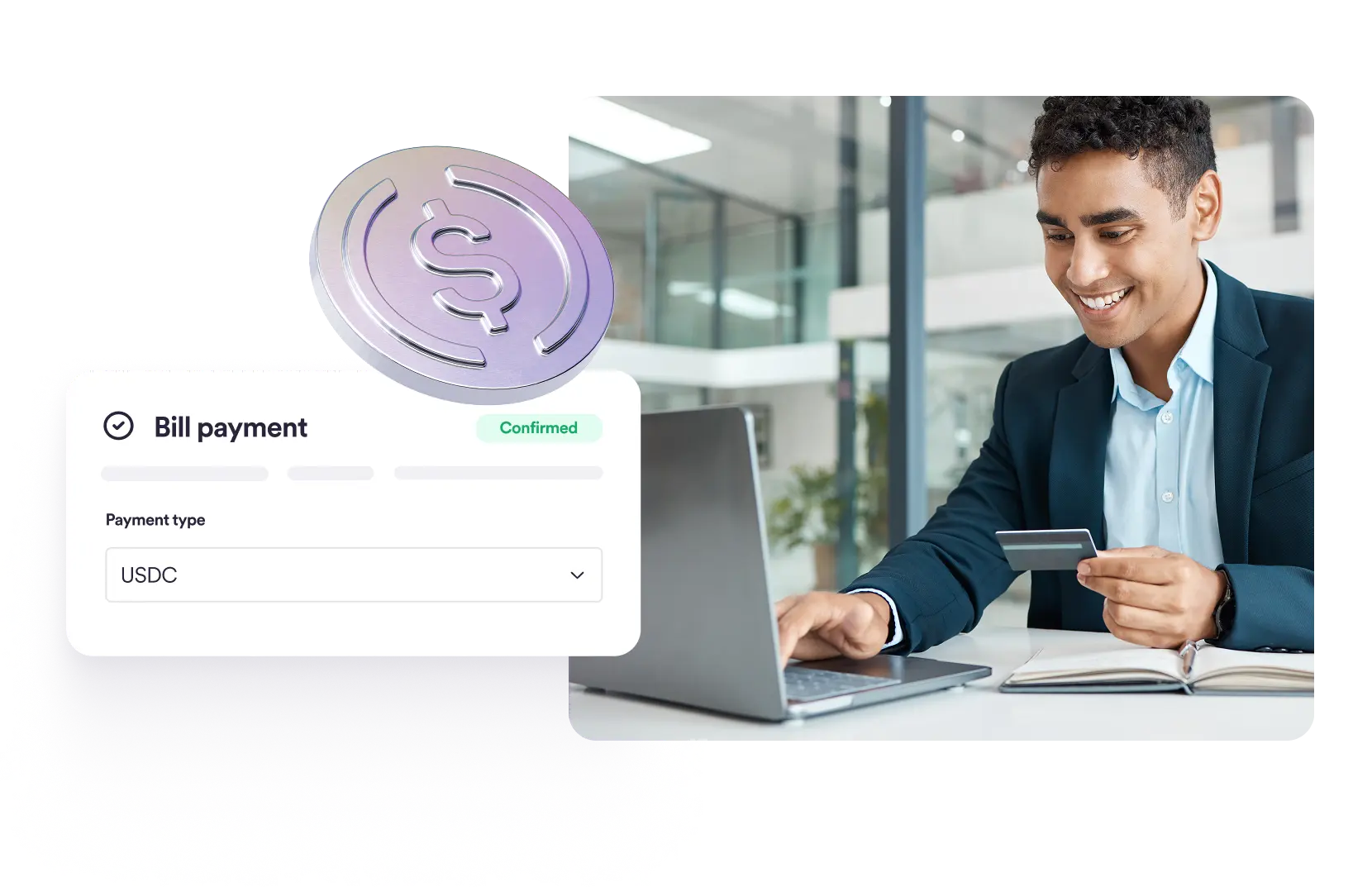
Most landlords do not accept cryptocurrency directly. You need a payment rail that converts USDC to fiat instantly. Services like Reap or Stripe Crypto act as this bridge, allowing you to pay in USDC while the recipient receives dollars in their bank account. This removes the volatility risk for your landlord and keeps the transaction compliant with standard banking channels.
Hardware Wallets for Secure Self-Custody



As an Amazon Associate, we may earn from qualifying purchases.
What is the 30% rent rule?
The 30% rent rule is a traditional budgeting guideline suggesting that you should spend no more than 30% of your gross monthly income on housing. Historically designed for salaried employees with predictable paychecks, this metric helps ensure you have enough left over for savings, debt repayment, and unexpected expenses.
For crypto earners, applying this rule requires adjusting for income volatility. Since USDC settlements and DeFi yields can fluctuate, relying on a single month’s earnings can be misleading. Instead, calculate your average monthly income over a 6-12 month period to smooth out market volatility. This approach prevents overextending your budget during high-yield months and protects you when yields drop.
When using USDC for rent, treat your stablecoin balance as your "income buffer." Ensure that your rent payment does not exceed 30% of your verified average income, not your current balance. This distinction maintains financial stability regardless of short-term market swings.
No comments yet. Be the first to share your thoughts!