Why USDC Wins for Rent Payments
Paying rent with cryptocurrency often feels like trying to fit a square peg in a round hole, but stablecoins solve the volatility problem that makes Bitcoin or Ethereum risky for monthly obligations. Among the various digital dollars available, USDC (USD Coin) has emerged as the preferred infrastructure for rent payments due to its regulatory transparency, speed, and cost efficiency. Unlike traditional ACH transfers that can take three to five business days to clear, USDC transactions settle in minutes, providing immediate proof of payment for both tenants and landlords.
The primary advantage of USDC lies in its 1:1 peg to the US dollar, ensuring that the amount you send is the exact amount the landlord receives. This stability eliminates the stress of market fluctuations during the settlement window. USDC operates on major blockchains like Ethereum, Solana, and Polygon, offering flexibility in transaction fees. On networks like Solana, fees are fractions of a cent, making it economically viable to pay even small rent amounts without losing a significant percentage to network costs.
In contrast, other stablecoins or direct crypto cards often impose hidden fees. For example, some users report that using certain crypto debit cards for rent incurs fees around 2.5%, whereas direct USDC transfers through specialized platforms like Rent.App or TrustLinq often charge no fees. This cost difference adds up significantly over a year. By using USDC, you bypass the intermediary banking layers that typically charge overdraft or wire fees, keeping more of your money in your pocket.
Top Settlement Bridges for Tenants
Paying rent in USDC works best when you use a regulated settlement bridge. These services act as the middleman, taking your digital assets and converting them into fiat currency that lands directly in your landlord’s bank account. This setup protects both parties: you avoid the volatility of holding crypto, and your landlord receives standard currency without needing to set up a crypto wallet.
The goal is to find a bridge with low fees, fast settlement times, and clear compliance with local financial regulations. Below are the most reliable options for tenants in 2026.
TrustLinq
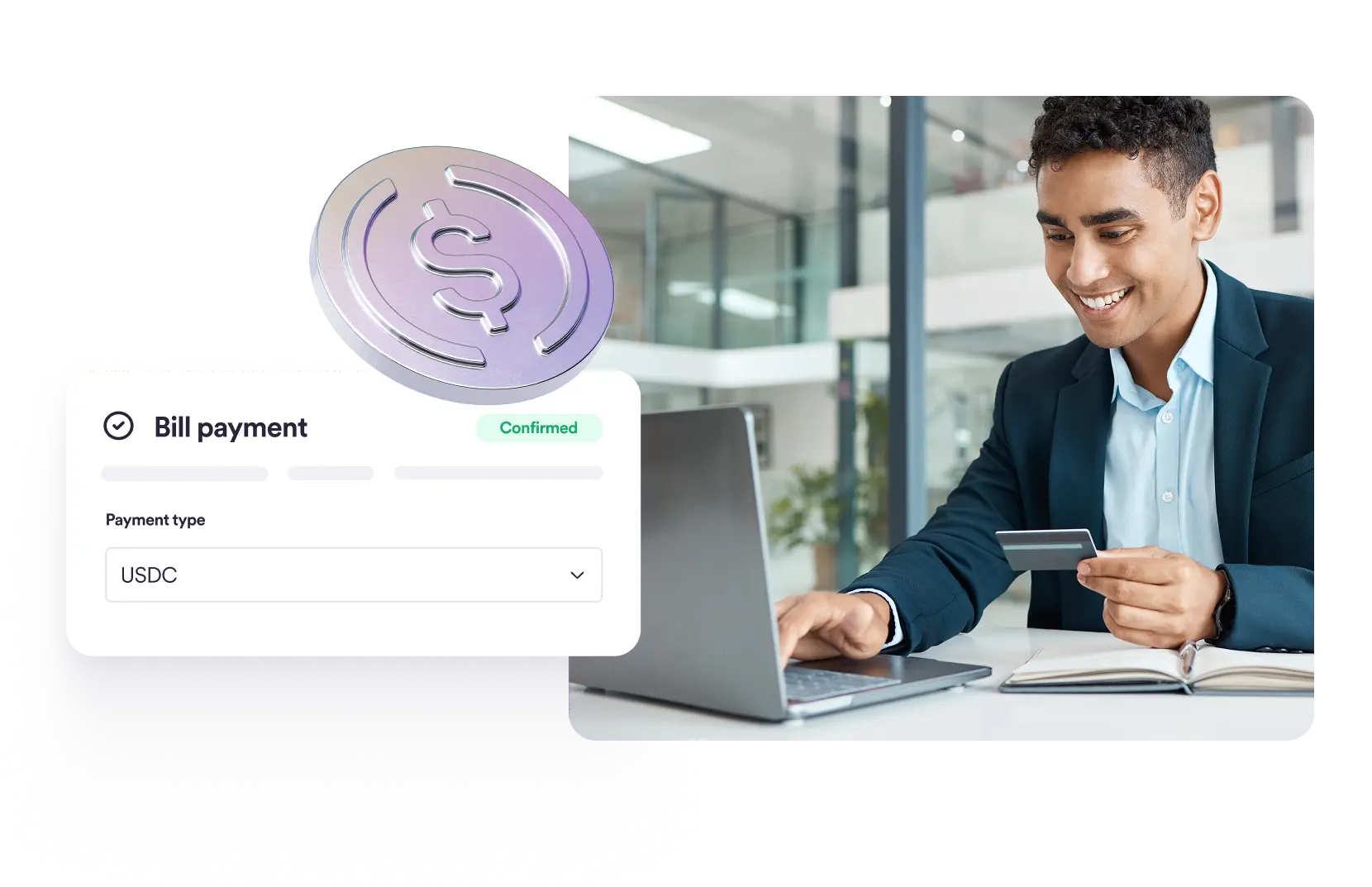
TrustLinq is designed for direct self-custody transfers. You send USDC, USDT, or EURC from your own wallet, and the bridge handles the conversion to fiat for the recipient. This is ideal if you want to keep full control over your private keys while ensuring the landlord gets traditional money. The platform emphasizes MiCA compliance, which adds a layer of regulatory safety for European tenants. Fees are generally competitive, but you should check the current exchange rate spread before confirming the transaction.
Rent.App
Rent.App takes a different approach by offering a fee-free payment experience for tenants. Instead of a third-party bridge taking a cut, the service integrates directly with property management software. You pay in USDC or USDT, and the platform handles the backend conversion. This is a strong option for tenants who want simplicity and zero transaction fees, provided their landlord already uses the Rent.App ecosystem. It removes the friction of finding a separate bridge service.
Mural Pay
Mural Pay focuses on daily usability and stability. While primarily known for daily spending, its infrastructure supports rent payments through stablecoin integration. The key advantage here is the seamless user experience; if you are already using Mural Pay for other expenses, you can likely fund your rent from the same stablecoin balance. This reduces the need to move funds between multiple wallets or exchanges. Check their current merchant onboarding status to ensure they support direct landlord payouts in your region.
UrbanPayx
UrbanPayx offers a comprehensive guide and infrastructure for property managers accepting crypto. For tenants, this means a more standardized payment process. If your landlord uses UrbanPayx’s accepted payment methods, you can send USDC through their verified channels. This option is best for tenants renting through larger property management firms that have already integrated crypto acceptance. It provides a clear audit trail for both tax purposes and lease compliance.


As an Amazon Associate, we may earn from qualifying purchases.
Tools for Landlords to Accept Crypto
To accept USDC without managing volatility, landlords need infrastructure that handles the settlement bridge automatically. The goal is simple: the tenant sends digital assets, and the landlord receives fiat currency in their bank account. This removes the risk of price swings and keeps the accounting familiar.
Several platforms now specialize in this flow. They act as the middleman, converting stablecoins to dollars instantly upon receipt. This allows property managers to accept crypto rent payments through regulated fiat settlement bridges while remaining compliant with local tax and financial regulations.
Comparison of Settlement Bridges
Different tools offer varying fee structures, settlement speeds, and compliance features. Choose a provider that aligns with your current property management software and banking setup.
| Provider | Fee | Settlement | Compliance |
|---|---|---|---|
| TrustLinq | ~1.5% | Same-day | MiCA & KYC |
| Plutus | ~1% | Instant | US Regulated |
| RentCrypto | ~2% | Next-day | Standard KYC |
When selecting a provider, look for those that explicitly support USDC and offer direct bank integration. Avoid platforms that require you to hold the crypto or manage your own wallet for the transaction. The right infrastructure should feel invisible to the tenant while providing a clear audit trail for your records.
Setting Up Your First USDC Rent Payment
Paying rent with USDC infrastructure is less about cryptocurrency speculation and more about settlement mechanics. The goal is to move digital dollars to your landlord’s bank account without the friction of traditional wire transfers or the risk of bounced checks. By using a dedicated settlement bridge, you retain the speed of blockchain while ensuring the recipient gets fiat currency.
1. Fund Your Self-Custodial Wallet
Start by acquiring USDC on a major exchange like Coinbase or Kraken, then withdraw it to your self-custodial wallet (such as MetaMask or Coinbase Wallet). Ensure the network matches the one supported by your landlord’s payment processor. For example, some platforms operate on Ethereum mainnet, while others use Base or Polygon for lower fees. Verify the balance is sufficient, including a small amount of the network’s native token (like ETH) to cover gas fees.
2. Connect to a Settlement Bridge
Navigate to a trusted settlement platform like TrustLinq or Rent.App. These services act as intermediaries, converting your USDC into fiat currency for the recipient. Connect your wallet securely to the platform. The interface will typically display the exchange rate and the estimated arrival time of the funds in the landlord’s bank account. Always verify the platform’s security credentials and read-through rates before proceeding.
3. Enter Landlord’s Bank Details
Input the landlord’s bank account information directly into the settlement bridge. This step is critical: the bridge uses this data to wire the converted fiat to the correct destination. Double-check the routing and account numbers. Most platforms allow you to save these details for future payments, but always verify them before each transaction to prevent errors.
4. Execute the Payment
Confirm the transaction amount and review the fees. Unlike traditional bank transfers, USDC payments often incur minimal network gas fees and small platform processing fees. Once you approve the transaction in your wallet, the USDC is sent to the bridge’s smart contract. The bridge then converts the USDC and initiates a traditional ACH or wire transfer to the landlord’s bank.
5. Track Confirmation and Receipts
After submission, you will receive a blockchain transaction hash (TxID). Use this hash to track the on-chain status. Most settlement bridges also provide a fiat transaction reference number. Share both with your landlord to ensure they can reconcile the payment. The fiat funds typically appear in the landlord’s bank account within 1-3 business days, depending on the settlement method used.
Verify the landlord’s routing and account numbers before finalizing the transaction. Errors here cannot be reversed on the blockchain.
Copy the on-chain TxID and the bridge’s fiat reference number. These are your proof of payment if disputes arise.

Send the reference numbers to your landlord immediately after payment. This speeds up their reconciliation process.
FAQs on Paying Rent With Stablecoins
Is paying rent with USDC legal?
Yes. USDC is a regulated stablecoin issued by Circle. Using it to pay rent is a standard financial transaction, though local tax laws regarding digital asset disposal may apply. Consult a tax professional for your specific jurisdiction.
Do I pay taxes when I pay rent with USDC?
In many jurisdictions, including the US, exchanging crypto for fiat to pay a vendor is a taxable event. You may need to report capital gains or losses based on the value of USDC at the time of transfer compared to when you acquired it.
Can I use USDC to buy a house?
Yes. USDC can be used to buy real estate through platforms like RealOpen. Buyers fund the purchase with USDC, while the platform converts the assets and wires fiat to escrow so the transaction closes like a traditional cash purchase.
No comments yet. Be the first to share your thoughts!